Can You Prove That Control Actually Operated?
The question for CISOs and Compliance Officers is no longer whether you have an AI policy. It is whether you can prove a control was operating when the agent made the decision — with a 60-second demo of evidence bound to live runtime.
Sep 6, 2026 · Upendra Bhandari · Compliance
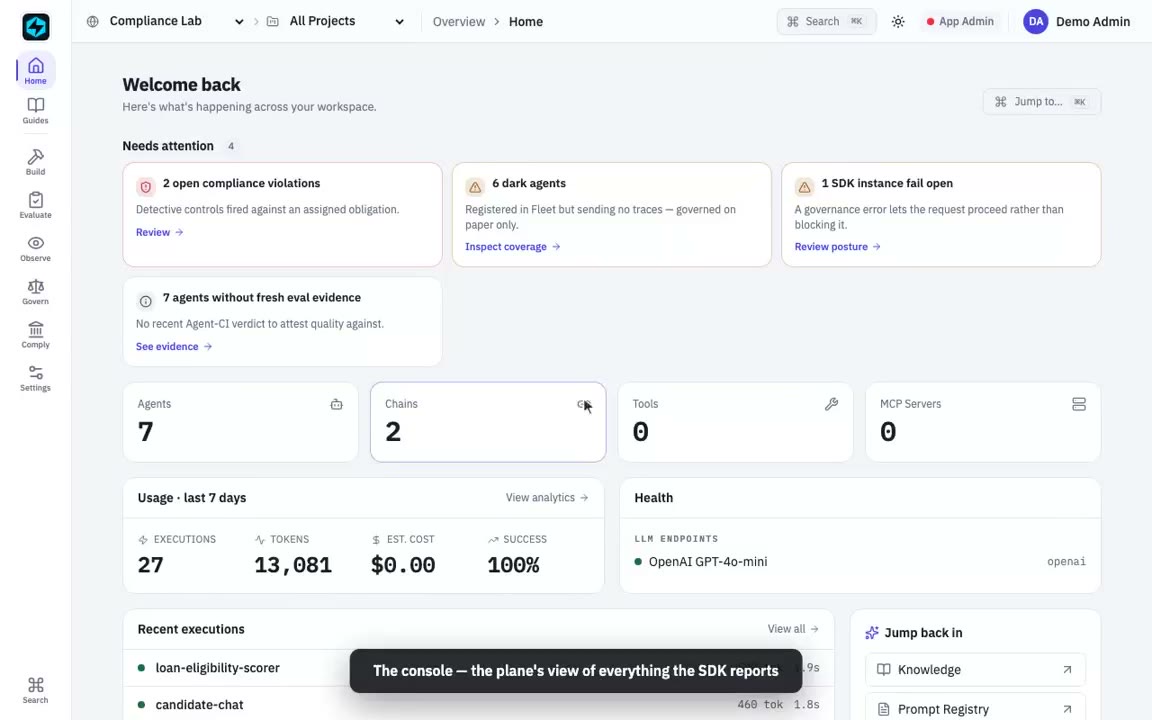
The question for CISOs, Compliance Officers and AI Officers is no longer: "Do we have an AI policy?"
It is: "Can you prove that this control actually operated when the agent made that decision?"
That is where many AI governance programmes will struggle — because the evidence still lives in documents, spreadsheets and attestations, while the agents are running somewhere else.
With FastAIAgent Enterprise, EU AI Act obligations are tied to live runtime evidence: traces, guardrails, evals, prompt approvals and human-in-the-loop events.
When a control stops working, the finding can surface automatically. When evidence is attached, it is protected and recorded in a verifiable audit trail.
Human judgement remains human — but the evidence behind that judgement becomes continuous, traceable and defensible.
The real test of AI governance will not be whether you can describe your controls. It will be whether you can prove they were operating.
See it against a real agent
A short demo of how FastAIAgent Enterprise binds EU AI Act obligations to live runtime evidence.
The longer argument behind this demo is in Evidence, not attestation — why an auditor wants the record that a control ran, not a signed claim that it exists. The Enterprise page covers the governance layer in full.
 {{ meta.author }}